
Puff Up - Balloon puzzle game
VOODOOCasual
3.82.77K Reviews
- Version
- 2.13.7
- Installs
- 10.00M
- Age Rating
- Everyone
Screenshots
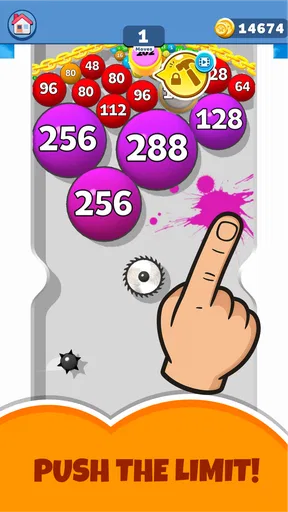
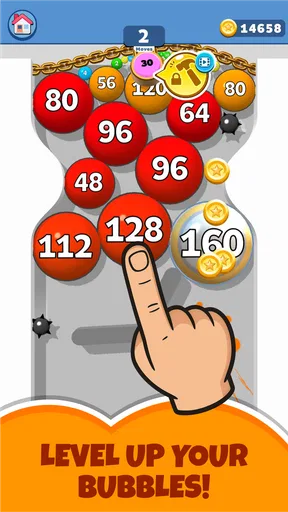
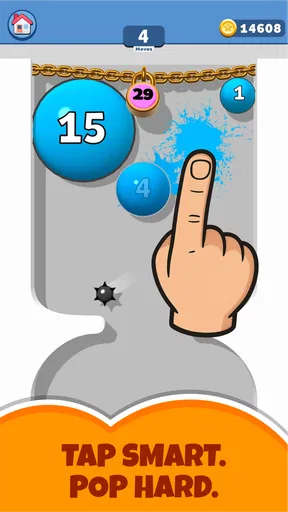
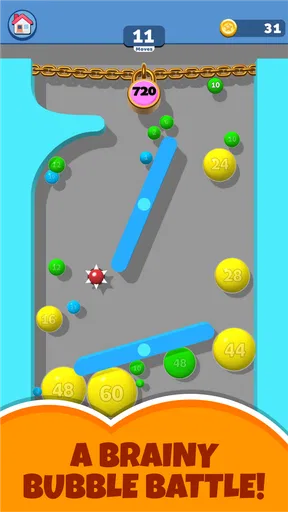
Our Review of Puff Up - Balloon puzzle game
 Analysis by Appyee
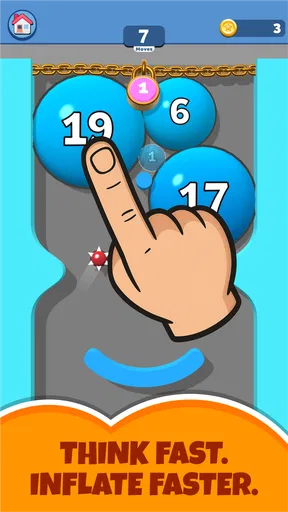
The first thing I noticed when I opened Puff Up was how quickly it explains itself. You inflate a balloon by holding your finger on the screen, then release it before the growing shape touches the spikes. That single action is the whole doorway into this casual puzzle game, but the timing makes it more interesting than the short store summary suggests. Every attempt asks me to judge space, movement, and risk in a few seconds rather than learn a complicated control system.
That simplicity is also the reason I can imagine recommending it to a friend who wants something easy to start without committing to a long campaign. It is free to download, made by VOODOO, suitable for Everyone, and available on devices running Android 8.0 or later. The game has reached over 10 million installs, so it is clearly aimed at a broad audience rather than a small group of specialist puzzle players. My experience is that it works best as a quick distraction, especially when I want a game that gives me an immediate task instead of a long explanation.
How the balloon loop feels in actual play
I find the balloon loop most useful as a quick exercise in noticing how risk changes, rather than as a test of reflexes alone. When I’m unsure about a tight space, I treat an early attempt as a way to learn where the danger becomes uncomfortable, then use the next one to adjust my release point. That small shift makes each restart feel more intentional, and it leads naturally to the question of what makes this simple action hold my attention.
The first action is simple, but the timing is not
The central gesture is holding and releasing. While I keep my finger down, the balloon expands; when I lift it, the attempt stops. The danger comes from the spikes placed around the available space. A balloon that looks safe at the beginning can become awkward as it grows, so I have to stop inflating before the obvious danger becomes unavoidable.
What I like here is that the control does not get between me and the puzzle. There is no virtual joystick to drag badly and no multi-button arrangement to remember. The challenge comes from deciding when enough is enough. That makes the game approachable for children and casual players, while still giving experienced players a reason to improve their judgement.
The best way to play is not to treat every level as a race to make the biggest balloon possible. I get better results when I first scan the shape of the available area, identify the most threatening spikes, and then inflate in short, deliberate bursts. This is a small but useful change in mindset: the goal is controlled growth, not maximum growth. A player who holds automatically until the balloon looks impressive will often create their own problem.
There is also a satisfying physical quality to the action. The balloon visibly changes while I hold the screen, so the risk is easy to understand. I do not need a tutorial window to tell me that a larger shape has less room. The visual feedback communicates the rule immediately, which is one of the strongest parts of the design.
The feedback rhythm creates the tension
Puff Up works because the feedback arrives at the same time as the decision. I hold, the balloon expands, the available gap feels smaller, and I release. If I misjudge the distance, the balloon pops. That result is clear and immediate, so I understand what went wrong without needing to inspect a score screen or study a replay.
This rhythm gives each attempt a compact beginning, middle, and end. The beginning is safe enough to encourage me to continue. The middle is where I compare the balloon’s size with the nearby obstacles. The end arrives when I either stop at a sensible point or push too far and lose the balloon. The loop is uncomplicated, but it does not feel empty because every fraction of a second changes the risk.
One practical tip is to release slightly earlier than instinct suggests when the balloon is approaching a narrow passage. The visual edge of the balloon can make a gap appear more generous than it really is, particularly when the surrounding spikes are arranged close together. Stopping early may feel inefficient, but surviving with a smaller balloon is usually more useful than losing an otherwise good attempt.
The game also benefits from being readable at a glance. I can play while waiting for a drink, sitting on public transport, or taking a short break between tasks. I do not have to remember a story objective or reconstruct a complicated board after looking away. That makes the feedback rhythm particularly suitable for interrupted play.
Why the reward is more than simply surviving
The immediate reward is the feeling of having judged the space correctly. When I release at the right moment and avoid the spikes, the success feels earned because the result follows directly from my choice. The game does not hide the cause of success behind a complicated upgrade system. I held, watched, released, and got the outcome I was aiming for.
That kind of reward suits the casual format. I can enjoy a successful attempt even when I only have a few minutes. There is no need to prepare for a long session, and the basic pleasure comes from improving my timing rather than collecting a large amount of information. If you like small puzzles where the solution is visible but the execution remains delicate, this is where the game makes its strongest case.
Another useful way to think about progress is to separate safe completion from greedy completion. On an unfamiliar puzzle, I first aim to understand how much room the balloon has. Once I have that sense, I can try a bolder inflation. This two-pass approach is more reliable than repeating the same failed hold without changing anything. It turns each mistake into a clue about the board’s usable space.
That said, the reward may feel thin to players who expect a deep sense of long-term progression. This is not the kind of casual game I would choose when I want a character to develop, a world to explore, or a large collection of tools to manage. Its reward is concentrated in the moment-to-moment action. For me, that is a strength during short breaks, but it can become a limitation during a long uninterrupted session.
The game is free, although it includes in-app purchases ranging from $0.99 to $99.99 per item. That matters because the core appeal is immediate and easy to try, while optional spending can change how comfortable the overall experience feels depending on how the game presents those purchases during play. I would approach it as a free casual title first and decide for myself whether any purchase is genuinely useful rather than assuming it is necessary to understand the game.
The reset is what makes another attempt tempting
When a balloon pops, the failure is quick enough that I usually know what I want to change. Maybe I held for too long near a sharp corner. Maybe I underestimated how much the balloon would expand into a nearby obstacle. Maybe I was trying to maximize the size instead of choosing a safe stopping point. Because the mistake is so easy to connect to the outcome, restarting feels like a chance to test a specific adjustment.
This is an important part of the game’s design. A slow reset would weaken the whole experience, because the puzzle depends on a rapid exchange between decision and correction. Here, the short nature of the attempt makes failure less discouraging than it would be in a longer level-based game. I can try again before the frustration has time to become the main event.
My preferred reset routine is to change only one thing at a time. If I release earlier on the next attempt, I learn whether timing was the real issue. If I change my approach, my finger position, and my target all at once, a success or failure tells me less. This sounds obvious, but it makes the game feel more like a small experiment and less like random tapping.
The reset loop is especially convenient for people who dislike losing substantial progress. A failed balloon does not force me to replay a lengthy story sequence or rebuild a complicated setup. The trade-off is that players who need a strong sense of permanence may find the cycle repetitive. The pleasure comes from refining the next attempt, not from preserving a large achievement.
There is also a subtle reason another session begins: the control is so accessible that I often feel I was close to doing better. A near miss creates a specific kind of unfinished feeling. I am not wondering whether I understand the rules; I am wondering whether I can release a little sooner or use the open space more intelligently. That small gap between understanding and execution is enough to pull me into another round.
Where it fits among casual puzzle alternatives
Compared with a traditional match-three puzzle, Puff Up asks for less planning across a board and more real-time judgement during a single action. I do not spend several moves building a combination. Instead, I read the space and manage one expanding object. That makes it a better choice when I want an immediate physical challenge, while a match-three game is usually more satisfying when I want layered planning and a longer chain of decisions.
It also differs from number-merging puzzles, including the familiar 2048-style format suggested by its store summary. In a number puzzle, I normally think about future board states, tile placement, and preserving useful spaces. Here, the important question is much narrower: how far can I safely inflate before the spikes become a problem? Players who enjoy compact visual timing may prefer this directness, while people who like deep foresight may find the puzzle less substantial.
Against endless runners, the game feels calmer because the main action is controlled by my hold and release rather than constant movement. There is still pressure, but it comes from judging expansion rather than reacting to a continuously scrolling path. I would pick this for a quiet break when I want concentration without the frantic pace of a runner.
It is not the right choice for everyone. If you want a rich narrative, competitive multiplayer, elaborate customization, or a large strategic system, this game is unlikely to meet that need. I would also skip it if repeating short attempts quickly becomes irritating for you. The design intentionally focuses on one gesture and one central hazard, so its appeal depends on whether that narrow loop feels satisfying rather than too limited.
Small techniques that make the game more enjoyable
First, I recommend treating the balloon’s outline as a boundary you must protect, not just an indicator of progress. The center may look comfortably away from a spike while the outer edge is already approaching danger. Watching the edge helps me release before the visual situation becomes crowded.
Second, I avoid holding continuously when the space is uncertain. Short holds give me more opportunities to reassess the position and reduce the chance of turning a safe opening into an accidental pop. This is particularly helpful when I am playing one-handed or when the screen is partly obscured by my finger.
Third, I use the first attempt on a difficult arrangement as reconnaissance. Instead of chasing the largest possible result, I watch which direction becomes dangerous first and remember that relationship for the reset. This makes the next attempt more deliberate and is more effective than simply trying to react faster.
Fourth, I keep the game in the “short break” category rather than expecting it to replace a full puzzle session. A few focused attempts can feel refreshing. Playing for too long without a clear personal goal can expose the limited control vocabulary, so I get more from it when I decide whether I am practicing safer releases or testing a more ambitious inflation.
Who should install it, and who should look elsewhere?
I think Puff Up is a good fit for someone who wants a casual game that can be understood immediately and played in small pieces. It is also suitable for families looking for an Everyone-rated game with a simple visual objective. The low barrier to entry means a new player can begin experimenting almost at once, while the timing gives the interaction enough tension to avoid feeling completely passive.
It may appeal to fans of minimalist mobile games that turn one gesture into a complete challenge. The developer, VOODOO, has kept the central idea focused instead of surrounding it with instructions that would slow down the first attempt. If your ideal phone game is something you can open during a spare minute and close without losing a complicated position, this is a sensible option.
I would point a different player toward another kind of puzzle if they want more control over the solution. Someone who enjoys carefully arranging pieces, planning several moves ahead, or solving a board through logic rather than timing may get more satisfaction from a conventional grid puzzle. Likewise, a player who wants a substantial progression system should not install this expecting the balloon mechanic to grow into a much larger adventure.
The technical entry point is reasonably broad because the current version is 2.13.7 and the game supports Android 8.0 or later. Its average rating is 3.8 from around 41 thousand ratings, with roughly 2.8 thousand written reviews. I read that overall response as a sign of a recognizable but not universally loved casual experience: plenty of people find the loop accessible, while others may want more variety or a smoother long-session reason to continue.
My verdict on the complete action-feedback-reward-reset loop
After spending time with it, I see Puff Up as a focused timing puzzle rather than a broad all-purpose game. The action is instantly understandable, the feedback is visible while I play, the reward comes from making a good judgement, and the reset is fast enough to encourage experimentation. That sequence is the real product. Everything depends on whether inflating a balloon near spikes remains enjoyable after the novelty of the first few attempts.
For me, it succeeds when I need a small mental break. I can concentrate on one decision, learn from a mistake, and try again without carrying a large amount of progress in my head. The most satisfying sessions are not necessarily the longest ones; they are the sessions where I notice my timing improving and stop before the repetition turns stale.
The limitations are equally clear. The one-gesture structure leaves less room for strategic variety than a full puzzle board, and players seeking deep progression may finish an attempt wanting more layers. The presence of in-app purchases is another reason to keep expectations practical: I would judge the free experience on its own and avoid treating optional spending as part of the basic requirement for play.
Overall, I would recommend it to a friend who likes quick, readable challenges and does not mind repeating a compact loop. I would describe it as a good “one more try” game: the balloon grows, the danger becomes obvious, the release decides everything, and a mistake immediately suggests a new approach. That is not a huge concept, but it is a clean one, and the simplicity is exactly why it can fit so neatly into everyday downtime.
Verdict
Strengths of Puff Up - Balloon puzzle game
- Simple drag-and-release controls are easy to learn.
- Short levels make it suitable for quick gaming sessions.
- Relaxing gameplay offers a pleasant break from more intense games.
- Increasing challenges keep the puzzle mechanics from feeling repetitive.
- Bright visuals and playful balloon effects appeal to casual players.
Limitations of Puff Up - Balloon puzzle game
- Some levels may feel frustrating when precise timing is required.
- The core mechanic can become repetitive after extended play.
- Progress may feel slow for players seeking fast-paced action.
- Ads can interrupt the experience, depending on the version and settings.
- Limited variety may reduce long-term appeal for experienced puzzle fans.
Other Releases by VOODOO
View All


Similar Picks in This Category
View All
My Talking Angela
Outfit7 Limited4.2

My Talking Tom
Outfit7 Limited4.3

Pou
Zakeh4.2

My Talking Tom 2: Pet Game
Outfit7 Limited4.3

Candy Crush Saga
King4.6

Bridge Race
Supersonic Studios LTD4.1
Frequently Asked Questions
What is Puff Up – Balloon puzzle game?
Puff Up is a casual puzzle game centered on inflating balloons and guiding them through obstacle-filled levels. The main challenge is deciding how much to inflate each balloon without touching spikes, walls, or other hazards. Its simple controls make it easy to start, while increasingly restrictive layouts add timing, precision, and planning as you progress.
How do you play Puff Up?
Gameplay is based on holding and releasing your finger at the right moment. While pressing the screen, the balloon grows larger, and releasing it stops the inflation. You need to reach the required size or target while avoiding obstacles and fitting through narrow spaces. Successful attempts depend on controlling the balloon’s size rather than inflating it as quickly as possible.
Is Puff Up free to download and play?
Puff Up can generally be downloaded and played for free, allowing users to experience its core levels without an upfront purchase. However, free mobile games may include advertisements, optional rewards, or in-app purchases depending on the version and platform. It is worth checking the store listing before downloading if you want to understand the available purchases and advertising options.
Does Puff Up require an internet connection?
Puff Up is designed as a lightweight casual game, so many of its basic levels can usually be played without a constant internet connection. Nevertheless, an internet connection may be necessary for advertisements, cloud-related features, updates, or restoring purchases. Availability of offline play can vary between versions, so testing the game after temporarily disabling mobile data or Wi-Fi is recommended.
Is Puff Up suitable for children and casual players?
Puff Up is suitable for players who enjoy short, uncomplicated puzzle sessions and does not require advanced gaming experience. The controls are straightforward, but later stages can demand patience and careful timing. Parents should still review the age rating, advertising, and in-app purchase information on the relevant app store, particularly if children will be playing on a shared device.
Play our best games!


